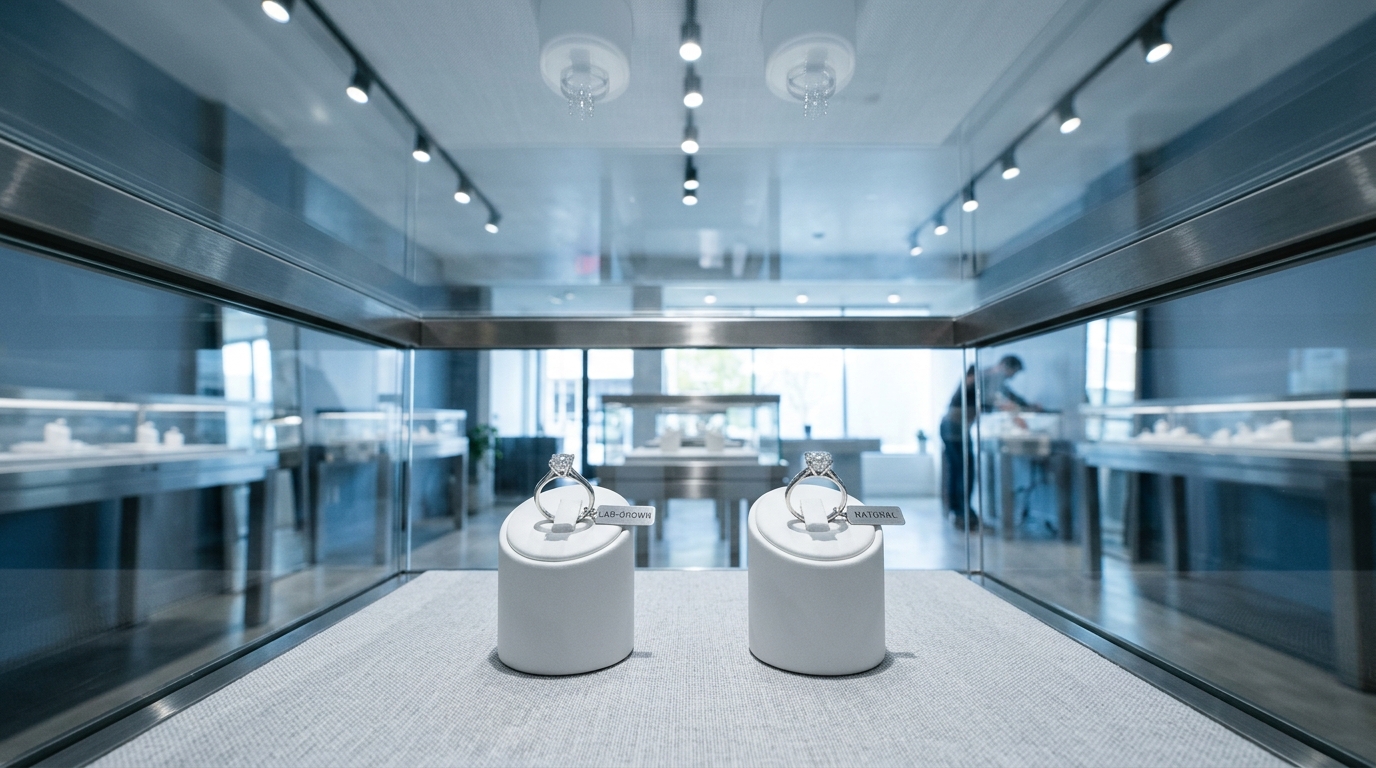
Lab-grown diamonds are chemically, physically, and optically identical to natural diamonds - both score 10 on the Mohs hardness scale, both are pure crystallized carbon, and both pass every standard diamond tester. The only meaningful differences are origin, price, and long-term resale value. Here is a clear breakdown of both.
What Is a Lab-Grown Diamond?
A lab-grown diamond is created in a controlled industrial environment using one of two methods: High Pressure High Temperature (HPHT) or Chemical Vapor Deposition (CVD). HPHT replicates the intense geological pressure of Earth's mantle. CVD grows a diamond layer by layer from a carbon-rich gas plasma. Both processes produce genuine diamonds - not simulants like moissanite or cubic zirconia.
The Gemological Institute of America (GIA) has graded lab-grown diamonds since 2007 and issues reports for them using the same 4Cs framework - cut, color, clarity, and carat - that applies to natural stones.
What Is a Natural Diamond?
Natural diamonds form between 1 billion and 3.3 billion years ago, roughly 100 miles below Earth's surface under extreme heat and pressure. Volcanic activity carries them upward through kimberlite pipes, where they are mined. The rarity of that geological process is the core argument for natural diamonds' enduring value.
Major mining operations are concentrated in Russia (ALROSA), Botswana (Debswana), Canada, and Australia. Each natural diamond has a unique internal fingerprint of inclusions and growth patterns.
Lab-Grown vs. Natural Diamonds: 7 Key Differences
- Origin: Lab-grown - industrial facility, weeks to months of growth. Natural - Earth's mantle, billions of years.
- Price: Lab-grown diamonds currently sell for 70–85% less per carat than comparable natural stones at major retailers. A 1-carat, VS1 clarity, G color lab-grown diamond retails around $800–$1,200. A natural equivalent runs $5,000–$7,500.
- Resale Value: Natural diamonds retain 20–40% of retail resale value on the secondary market. Lab-grown diamonds currently resell at 5–15% of original retail price due to rapidly falling production costs and market saturation.
- Chemical Composition: Identical - both are 100% carbon in a cubic crystal lattice. Neither a gemologist nor a standard tester can distinguish them without specialized equipment.
- Environmental Impact: Natural diamond mining uses heavy land disruption, significant water consumption, and large carbon footprints per carat. Lab-grown production is energy-intensive but avoids land excavation. Renewable-powered CVD facilities have a meaningfully lower carbon footprint, though coal-powered facilities can match or exceed mining emissions.
- Availability and Size: Lab-grown diamonds are available in larger carat weights at accessible prices. A 3-carat lab-grown stone is affordable for a mainstream budget; a natural 3-carat stone is a luxury purchase.
- Certification: Both can be GIA-certified. GIA reports for lab-grown diamonds are clearly labeled "Laboratory-Grown" and include the same grading detail as natural diamond reports.
Price Trajectory: What the Market Shows
Between 2020 and 2025, lab-grown diamond wholesale prices fell by approximately 80%, driven by scale manufacturing improvements, particularly in CVD reactor efficiency. This trend has not reversed. As of 2026, production costs continue to decline, which means lab-grown diamonds purchased today are unlikely to hold retail value over a 5–10 year horizon. Buyers should treat lab-grown diamonds as a fashion or sentimental purchase, not a financial investment.
Natural diamond prices have shown more stability, though they are not immune to market fluctuation. The sanctions environment affecting ALROSA (the world's largest diamond producer by volume) since 2022 has reshuffled global supply chains and added price unpredictability for natural rough diamonds.
The Ethics Argument - Honest Assessment
Lab-grown diamonds are frequently marketed as the ethical choice. That framing deserves scrutiny on both sides.
Arguments for lab-grown on ethics: No artisanal mining communities exposed to dangerous conditions. No land destruction in ecologically sensitive regions. Verifiable chain of custody.
Arguments against oversimplifying the ethics: Natural diamond mining supports hundreds of thousands of jobs in Botswana, Namibia, and South Africa - economies where the industry contributes 20–35% of national export revenue. The Kimberley Process, while imperfect, has reduced conflict diamond trade to under 1% of global supply. Choosing lab-grown over natural can economically harm communities that depend on ethical mining operations.
The honest answer: neither option is perfectly clean, and neither is irredeemably problematic. Your values determine which trade-offs matter more to you.
Which Diamond Is Right for You?
The right choice depends on your priorities:
- Maximize size and sparkle on a fixed budget: Lab-grown wins decisively. You get a larger, higher-clarity stone for the same spend.
- Long-term heirloom or investment value: Natural diamond is the stronger choice. Resale markets for natural stones remain established and functional.
- Environmental priority: Choose a lab-grown diamond from a producer using verified renewable energy, or choose a certified ethical natural diamond from Canadian or Botswana-origin stones.
- Sentimental meaning of rarity: A natural diamond's geological origin is irreplaceable. If "formed in the Earth over billions of years" matters to you, that meaning is real and valid.
- Engagement rings with tight budgets: Lab-grown diamonds let couples allocate budget toward cut quality - the single biggest driver of visual brilliance- rather than carat weight on a natural stone.
Can You Tell the Difference Just by Looking?
No. A trained gemologist examining a lab-grown and natural diamond side by side cannot distinguish them with the naked eye or a standard loupe. Detection requires either specialized spectroscopy equipment (like De Beers' DiamondView or Gemological Institute devices) or identifying growth patterns visible only under photoluminescence testing. Every reputable retailer discloses whether a diamond is lab-grown or natural before sale - that disclosure is both an industry standard and a legal requirement in most markets.
Retailer Landscape in 2026
Major jewelry retailers - including Brilliant Earth, James Allen, Blue Nile, and Signet Jewelers' brands (Kay, Zales, Jared) - all offer both lab-grown and natural diamond collections. Lab-grown now accounts for roughly 40–50% of diamond engagement ring units sold in the United States, up from under 10% in 2020. That market share reflects consumer response to price, not a consensus that lab-grown is superior in every dimension.
Lab-grown Diamonds Vs Natural Diamonds FAQ
Are lab-grown diamonds real diamonds?
Yes. Lab-grown diamonds are real diamonds in every scientific sense - same carbon crystal structure, same hardness (10 Mohs), same optical properties. The Federal Trade Commission revised its guidelines in 2018 to confirm that "diamond" applies to lab-grown stones without requiring a qualifier, though sellers must disclose the origin.
Do lab-grown diamonds hold their value?
No, not in the current market. As of 2026, lab-grown diamonds resell at roughly 5–15% of original retail price due to falling production costs and growing supply. They should be purchased for sentimental or aesthetic value, not as a financial asset.
Which diamond has better clarity and color - lab-grown or natural?
Lab-grown diamonds are more frequently produced in higher clarity and color grades because manufacturers can control growth conditions. A budget that buys a SI1/H natural diamond often buys a VS1/F or better lab-grown stone. That said, grading standards are identical - a D/IF lab-grown and a D/IF natural are both exceptional stones by any objective measure.
How do I know if a diamond is lab-grown or natural when buying?
Any reputable retailer discloses origin before purchase and on the sales receipt. GIA-certified diamonds come with a report that explicitly states "Natural" or "Laboratory-Grown." Additionally, GIA laser-inscribes the girdle of lab-grown diamonds it certifies with the report number and a "LG" notation. Buying a GIA, IGI, or AGS-certified stone guarantees documented disclosure.
Is a lab-grown diamond a good choice for an engagement ring?
For many couples, yes - particularly those prioritizing a larger, high-quality stone within a defined budget. The diamond looks identical and wears identically to a natural stone. The consideration is whether the lower resale value matters to you. If the ring is meant as a permanent symbol rather than a liquid asset, a lab-grown diamond delivers exceptional optical value for the price.