Gold is the better choice for sensitive skin, long-term durability, and warm skin tones, while silver wins on affordability, versatility with cool tones, and a bright, modern aesthetic. The right answer depends on your skin chemistry, lifestyle, and budget - and neither metal is universally superior.
Choosing between gold and silver jewelry is one of the most common dilemmas in personal style. Both metals have centuries of cultural weight behind them, and both can look stunning - but they behave differently on the body, age differently over time, and suit different people in distinct ways. This guide breaks down the real differences so you can make an informed decision.
The Core Differences: Gold vs. Silver at a Glance
Factor Gold Silver Base metal composition Pure gold (24K) alloyed with copper, zinc, or silver Sterling silver = 92.5% silver, 7.5% copper Tarnish resistance Does not tarnish (14K and above) Tarnishes over time; requires polishing Hypoallergenic rating Higher (especially 18K–24K) Lower - copper alloy triggers some skin reactions Durability Highly durable; resists scratching better at lower karats Softer; prone to scratches and dents Price point Significantly higher Much more affordable Best skin tone match Warm undertones (yellow, olive, dark) Cool undertones (pink, blue, fair) Style aesthetic Classic, luxurious, warm Modern, edgy, brightUnderstanding Gold: Karats, Colors, and Composition
Gold jewelry is measured in karats (K), which indicates the proportion of pure gold in the alloy. Here's what that looks like in practice:
- 24K gold- 99.9% pure gold. Extremely soft and impractical for everyday jewelry.
- 18K gold- 75% gold. Excellent balance of purity and durability; widely used in fine jewelry.
- 14K gold- 58.3% gold. The most popular choice in the United States for everyday rings and bracelets.
- 10K gold- 41.7% gold. The minimum legal standard for "gold" in the U.S.; hardest and most affordable gold option.
Gold also comes in three primary colors, each created by changing the alloy composition:
- Yellow gold- The classic. Alloyed with copper and zinc, it retains the warm, rich hue most people picture.
- White gold- Mixed with palladium or nickel and coated with rhodium plating for a silver-like appearance without silver's maintenance issues.
- Rose gold- High copper content gives it a pink blush. Popular in romantic and minimalist designs.
One practical note: white gold needs rhodium re-plating every one to three years depending on wear. Factor that into your long-term cost calculation.
Understanding Silver: Sterling, Fine, and Plated
Not all silver is the same, and the differences matter more than most buyers realize.
- Fine silver- 99.9% pure silver. Too soft for most jewelry; rarely used outside of beads and some earring settings.
- Sterling silver- 92.5% silver, 7.5% copper (stamped "925"). The standard for quality silver jewelry worldwide.
- Silver-plated- A base metal (often brass or copper) coated with a thin silver layer. The plating wears off within months to a few years. Avoid this category for anything you plan to keep.
- Argentium silver- A modern alloy replacing some copper with germanium, making it more tarnish-resistant than standard sterling. Look for the "Ar" hallmark.
Sterling silver's biggest weakness is tarnish - a chemical reaction with sulfur compounds in the air and on skin that turns the metal dark. The good news: tarnish is entirely reversible with a polishing cloth or a simple baking soda paste. It's maintenance, not damage.
Skin Tone and Undertone: The Most Overlooked Factor
Your skin's undertone - not its depth or surface color - determines which metal creates the most flattering contrast.
- Warm undertones (yellow, golden, olive, peachy) - Yellow and rose gold harmonize beautifully, creating a cohesive, luminous look.
- Cool undertones (pink, red, bluish veins) - Silver and white gold create clean contrast against cool skin without competing with your natural tone.
- Neutral undertones- Lucky. Both metals work. Experiment freely.
A quick test: look at the veins on the inside of your wrist in natural light. Greenish veins suggest warm undertones; bluish or purple veins suggest cool undertones; a mix suggests neutral.
Lifestyle and Durability Considerations
Your daily habits should weigh heavily in this decision.
If you wear your jewelry 24/7- gold wins decisively. Sterling silver tarnishes faster with constant exposure to sweat, lotions, and water. Gold (14K or 18K) handles all of these without degrading.
If you have an active or hands-on job- lower-karat gold (14K or 10K) or argentium silver offer better scratch resistance than high-karat gold or standard sterling.
If you have sensitive skin or metal allergies- go high-karat gold (18K or above) or fine silver. The alloy metals - particularly nickel in some white gold and copper in sterling silver - are common irritants. 14K gold and sterling silver both contain enough copper to cause reactions in sensitive individuals.
If you rotate your pieces frequently- silver's maintenance demands become less of an issue. Store silver in anti-tarnish pouches when not in use, and polishing takes less than two minutes.
Cost: What to Actually Expect
Gold costs significantly more than silver - not just because of raw material price, but because gold jewelry commands higher labor and design premiums. A simple sterling silver ring from a respected jeweler might run $40–$150, while a comparable 14K gold ring starts around $200 and scales quickly with weight and design complexity.
That said, gold holds its intrinsic value better over time. A 14K gold piece retains melt value tied to gold spot prices. Sterling silver has melt value too, but it's proportionally much lower. If you're buying jewelry as a long-term investment or heirloom, gold makes more financial sense. If you're building a wearable everyday collection without a large upfront budget, silver delivers far more variety per dollar.
Can You Mix Gold and Silver?
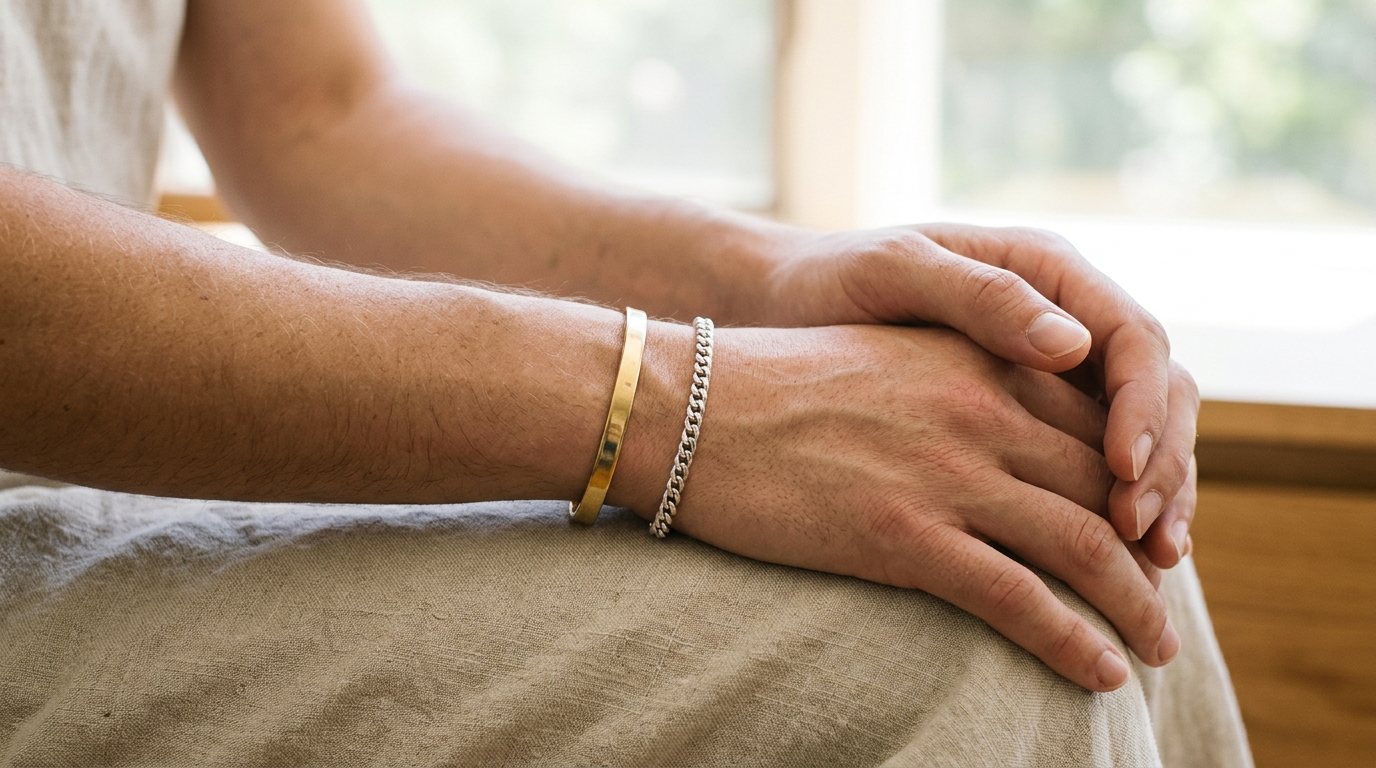
Absolutely - and it's been a mainstream styling choice since at least the early 2010s. Mixing metals works best when you commit to it intentionally rather than doing it accidentally. Stack a yellow gold cuff with sterling silver rings. Layer a white gold necklace over a silver chain of a different length. The key is varied texture and scale so each piece reads as a deliberate choice rather than a mismatch.
If you're new to mixing metals, start with one anchor piece in your dominant metal and add one accent in the contrasting metal. Avoid a 50/50 split until you're confident in the aesthetic you're building.
Which Metal Should You Choose?
Choose gold if: you have sensitive skin, want minimal maintenance, prefer warm or classic aesthetics, have warm skin undertones, or are making a long-term investment piece.
Choose silver if: you want maximum variety on a budget, have cool skin undertones, enjoy an edgier or more contemporary look, and don't mind occasional polishing.
Choose both if: you want a flexible wardrobe, dress across multiple aesthetics, or simply love jewelry and see no reason to limit yourself.
---Does gold jewelry tarnish?
Pure gold (24K) does not tarnish at all. Lower-karat alloys like 10K gold can develop a slight patina over years due to the base metal content, but this is uncommon with normal care. 14K and 18K gold remain bright with basic cleaning. Gold is far more tarnish-resistant than sterling silver in everyday conditions.
Is sterling silver safe for people with metal allergies?
Sterling silver contains 7.5% copper, which can irritate sensitive skin, but nickel - the most common jewelry allergen - is not a standard component of sterling silver. If you react to sterling silver, copper sensitivity is the likely culprit. For confirmed nickel allergies, argentium silver and fine silver are safer options. For broad metal sensitivity, 18K or higher gold is the most hypoallergenic mainstream choice.
How do I keep sterling silver from tarnishing?
Store sterling silver in airtight anti-tarnish pouches or zip-lock bags away from humidity. Remove silver jewelry before swimming, showering, or applying lotions and perfumes. Polish with a soft silver polishing cloth when tarnish appears - this removes the oxidation layer without scratching the metal. Regular wear actually slows tarnishing because friction from skin contact buffs the surface naturally.
What karat gold is best for everyday wear?
14K gold is the best all-around choice for everyday jewelry in 2026. It contains 58.3% pure gold, making it hard enough to resist scratching from daily activity while remaining rich enough in gold content to resist tarnish and skin reactions. 18K is a step up in purity and appearance but slightly softer. 10K is the most durable and affordable but has a less warm color tone.
Can I wear gold and silver jewelry together?
Yes - mixed metal styling is a well-established approach in contemporary jewelry. The most effective way to mix gold and silver is to vary the scale and texture of each piece so the contrast reads as intentional. Start with one dominant metal (whichever suits your undertone better) and add one or two silver or gold accents. Avoid equal quantities of each metal on the same part of the body, which can look unintentional rather than curated.