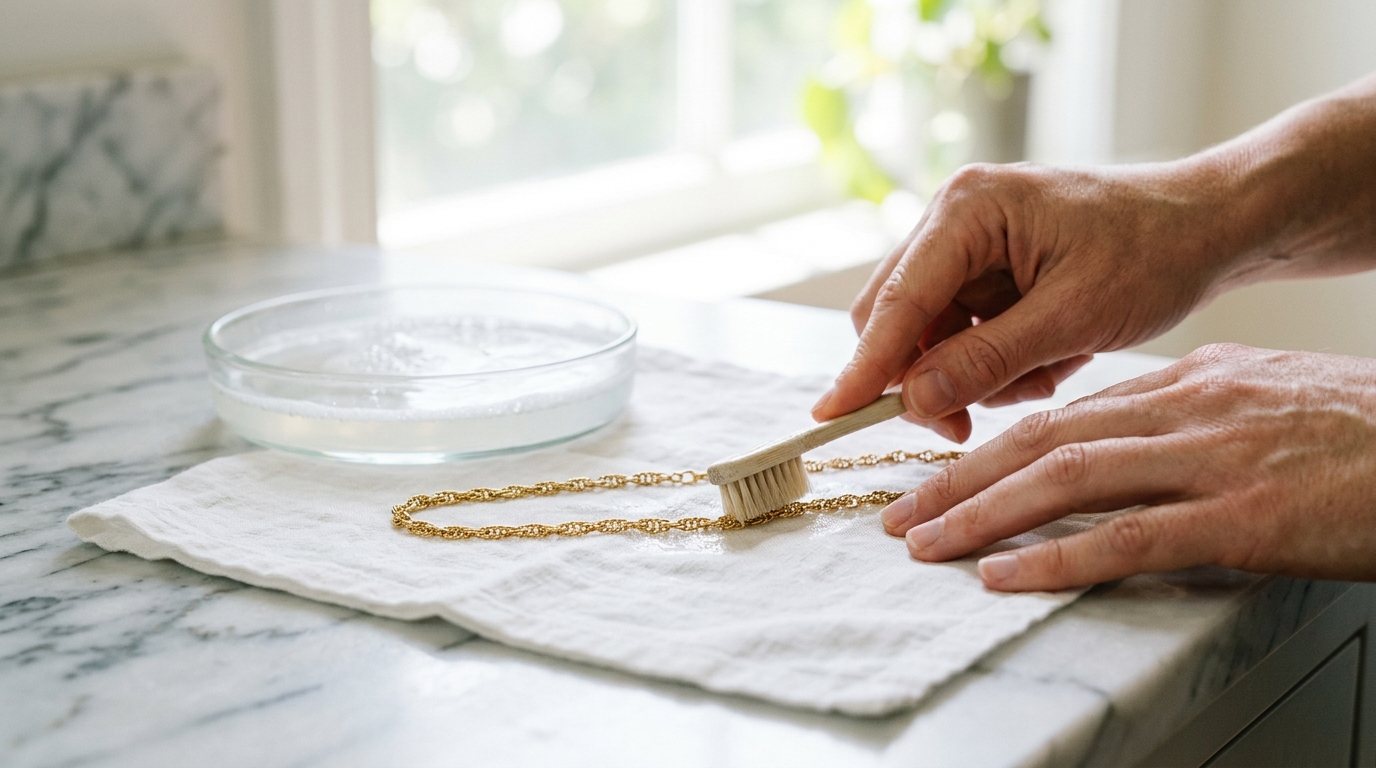
The safest and most effective way to clean fine jewelry at home is a warm water soak with a few drops of mild dish soap, gentle scrubbing with a soft-bristle toothbrush, and a thorough rinse - no ultrasonic cleaners, bleach, or abrasive cloths required. This method works for gold, platinum, and most gemstones without risking damage to settings or stone surfaces.
Fine jewelry collects skin oils, lotions, perfume residue, and everyday grime faster than most people realize. A diamond ring worn daily can lose up to 30% of its brilliance within two weeks simply from buildup in the pavilion facets. Cleaning at home between professional appointments keeps your pieces sparkling and helps you spot loose prongs or chips before they become expensive problems.
What You Need Before You Start
- Mild dish soap- Dawn Ultra or similar grease-cutting formulas work best; avoid antibacterial soaps with triclosan
- Warm (not hot) water- extreme heat can crack certain stones and loosen adhesive settings
- A soft-bristle toothbrush- designate one exclusively for jewelry to avoid cross-contamination with toothpaste
- Two clean microfiber cloths- one for drying, one for final polishing
- A fine mesh strainer or a bowl- never clean jewelry directly over an open drain
- Jeweler's loupe (optional)- a 10x loupe lets you inspect prongs and settings after cleaning
Step-by-Step Cleaning Instructions by Metal Type
Gold (Yellow, White, and Rose Gold)
- Mix 1 cup of warm water with 2–3 drops of mild dish soap in a small bowl.
- Submerge the piece and let it soak for 15–20 minutes.
- Gently scrub all surfaces, including behind settings and beneath stones, with your soft toothbrush.
- Rinse thoroughly under warm running water held over a mesh strainer.
- Pat dry with a microfiber cloth and let air-dry completely before storing.
White gold is often coated with rhodium plating. Avoid vigorous scrubbing or abrasive cloths - they accelerate rhodium wear, which dulls the bright white finish. Professional re-plating typically runs $50–$120 per piece when needed.
Platinum
Platinum is the most durable precious metal used in fine jewelry and tolerates the same soapy-water method without issue. Unlike white gold, platinum develops a natural patina called a "satin finish" over time. Some owners prefer this look; others request a professional polish to restore the high shine. At home, the soap-and-brush method is perfectly safe and will not strip the metal.
Sterling Silver
Silver tarnishes through a chemical reaction with sulfur compounds in the air - it's oxidation, not dirt. Soapy water removes surface grime, but for tarnish specifically, use a dedicated silver polishing cloth (brands like Hagerty or Town Talk are widely available) or make a paste of two parts baking soda to one part water. Apply gently, rinse well, and dry immediately. Never soak silver in water for extended periods, as it accelerates tarnish in the long run.
Gemstone-Specific Safety Rules
This is where most at-home cleaning mistakes happen. Not all gemstones tolerate water, heat, or soap equally.
Gemstone Safe Cleaning Method What to Avoid Diamond Soapy water soak + soft brush Chlorine bleach (pits metal settings) Ruby & Sapphire Soapy water soak + soft brush Steam cleaning if fracture-filled Emerald Damp cloth only - quick wipe Soaking (most emeralds are oil-treated) Pearl Damp cloth with mild soap, no soaking Ultrasonic cleaners, ammonia, vinegar Opal Dry soft cloth only All liquids (water causes crazing) Turquoise Dry soft cloth only Water, chemicals (highly porous) Amethyst & Citrine Soapy water soak + soft brush Prolonged sun or heat exposure Alexandrite & Garnet Soapy water soak + soft brush Ultrasonic cleaners (risk of fracture)5 Things You Should Never Use on Fine Jewelry
- Bleach or chlorine-based cleaners- chlorine chemically attacks gold alloys, causing pitting and eventual metal failure at prongs
- Toothpaste- it contains micro-abrasives rated at 70–150 RDA that scratch softer metals and gold vermeil plating
- Baking soda on gemstones- safe on silver metal but abrasive enough to scratch softer stones like pearls (Mohs hardness 2.5–3)
- Hand sanitizer and acetone- acetone dissolves adhesives used in doublet opals, composite stones, and some resin-filled gems
- Paper towels- the wood-fiber texture scratches polished metal surfaces; always use microfiber or pure cotton
How Often Should You Clean Fine Jewelry at Home?
Rings worn daily benefit from a gentle cleaning every 1–2 weeks. Necklaces and earrings accumulate less contact grime and can go 3–4 weeks between cleanings. Pieces stored in a jewelry box and worn occasionally only need cleaning before each wear. Schedule a professional ultrasonic cleaning and prong inspection with a certified jeweler at least once a year - twice a year for engagement rings and heirloom pieces with complex settings.
Safe Storage Prevents the Need for Frequent Cleaning
Where you store jewelry directly affects how fast it tarnishes or collects residue. Keep these practices in place:
- Store pieces individually in anti-tarnish pouches or fabric-lined compartments to prevent metal-on-metal scratching
- Keep silver pieces in airtight zip-lock bags with an anti-tarnish strip (3M makes effective strips widely sold through jewelry suppliers)
- Remove fine jewelry before swimming, showering, applying sunscreen, or spraying perfume - the rule is "jewelry goes on last, comes off first"
- Store away from direct sunlight - UV exposure fades amethyst, rose quartz, and kunzite over time
When to Stop and See a Professional Jeweler
At-home cleaning is maintenance, not repair. Stop cleaning and book a professional appointment if you notice any of the following:
- A stone that moves, rocks, or clicks when touched - the prong or bezel setting is compromised
- A prong that catches on fabric or skin - it's bent or broken
- Deep scratches on a diamond that don't improve with cleaning - they may be chips requiring re-cutting
- Persistent cloudiness in a stone after thorough cleaning - could indicate internal fractures or an oil treatment that has worn away (common in emeralds)
- Discoloration or dark spots on metal - early signs of metal corrosion or a reaction with skin chemistry
Catching these issues early keeps repair costs manageable. A re-tipping of a single prong typically costs $25–$50; replacing a lost stone runs dramatically higher depending on the gem.
Clean Fine Jewelry At Home FAQ
Can I use an ultrasonic cleaner at home on fine jewelry?
Home ultrasonic cleaners are safe for solid gold, platinum, and diamonds without fracture treatments. They are unsafe for pearls, emeralds, opals, turquoise, tanzanite, and any stone that is fracture-filled, oil-treated, or glued into its setting. When in doubt, skip the ultrasonic and use the soapy-water method instead.
Is it safe to clean jewelry with vinegar or baking soda?
Baking soda paste is safe for sterling silver metal surfaces but abrasive enough to damage soft gemstones and plated finishes. White vinegar is sometimes recommended for silver, but its acidity can damage pearls, coral, and some treated stones. Stick to mild dish soap for multi-stone or plated pieces.
How do I clean a diamond engagement ring at home?
Soak the ring in warm water mixed with 2–3 drops of Dawn dish soap for 20 minutes. Use a soft toothbrush to gently scrub the underside of the diamond where oils collect most heavily. Rinse under warm water over a mesh strainer, then dry with a lint-free microfiber cloth. Repeat every 1–2 weeks for daily-wear rings.
Can cleaning fine jewelry at home void a warranty or guarantee?
Most jeweler warranties and service plans specify professional cleaning intervals but do not void coverage from gentle at-home soap-and-water cleaning. Using harsh chemicals like bleach, ammonia, or abrasive pastes can void coverage if they visibly damage the piece. Always read the specific terms of your warranty and keep receipts for professional cleanings.
What is the fastest safe way to make jewelry shine again before wearing it?
A quick polish with a clean microfiber jewelry cloth removes fingerprints and surface oils in under a minute and is safe for all metals and most gemstones. For a deeper shine on diamonds or sapphires specifically, a 10-minute soapy soak followed by a dry buff is the fastest effective method that won't risk damage.